

Aging in place in 2026 is no longer just a personal preference; it is a healthcare transformation movement. More older adults want to remain in their homes rather than transition into institutional care. At the same time, workforce shortages, rising healthcare costs, and chronic disease prevalence are forcing innovation toward home-based care models.
By 2030, nearly 1 in 5 Americans will be over 65. The implications are massive for families, healthcare systems, insurers, and technology innovators.
The real question now is not whether aging in place will expand.
The question is:
How do we make it safer, smarter, and scalable?
What This Means in 2026 & beyond:
The aging population is reshaping healthcare demand across every sector.
| Year | 65+ Population | % of U.S. Population | 85+ Population | Key Impact |
|---|---|---|---|---|
| 2020 | 56 Million | 16% | 6.5 Million | 1 in 6 Americans 65+ |
| 2030 | 72 Million | 20% | — | Older adults may outnumber children |
| 2060 | 88.8 Million | — | 17.5 Million | 85+ nearly triples |
- Chronic disease management moving into the home
- Declining institutional care capacity
- Rapid growth in caregiver demand
- Expansion of digital and AI-enabled care models
Healthcare is shifting from hospital-centered to home-centered care ecosystems.
Why Aging in Place Matters More Than Ever
Several structural forces are accelerating this shift
- Seniors Prefer It: Autonomy, familiarity, and emotional well-being drive preference for home living.
- Institutional Care Is Shrinking: Nursing homes are closing or downsizing due to staffing shortages.
- Chronic Conditions Require Continuous Monitoring: 93% of seniors live with at least one chronic condition.
- Cost Pressure: Long-term institutional care is expensive. Preventive home care reduces ER visits and readmissions.
These forces are pushing healthcare systems to rethink where care happens.
The Real Challenges of Aging in Place

While the concept is compelling, aging in place presents real operational challenges. One of the most pressing issues is the growing workforce shortage in home health and direct care roles. Demand for home health aides and personal caregivers continues to outpace supply, creating access gaps for families who require in-home support.
Another barrier lies in housing infrastructure. Most American homes were not originally designed for aging adults. Narrow hallways, stair-heavy layouts, and bathrooms without safety modifications create fall risks that can lead to serious medical complications. Retrofitting homes with ramps, grab bars, and mobility-friendly designs is essential but often financially burdensome.
Financial complexity adds another layer of difficulty. Traditional Medicare does not cover long-term custodial home care or most home modifications. Medicaid waivers help in certain states, but availability varies widely. As a result, families frequently shoulder both the logistical and financial burden of care coordination.
Caregiver strain is equally significant. Millions of Americans balance employment, parenting, and elder care responsibilities simultaneously. Without structured digital coordination tools or community-based support programs, the emotional and physical toll can be substantial.
These challenges underscore why innovation and policy reform must move in parallel with demographic change.
Technology Transforming Aging in Place in 2026
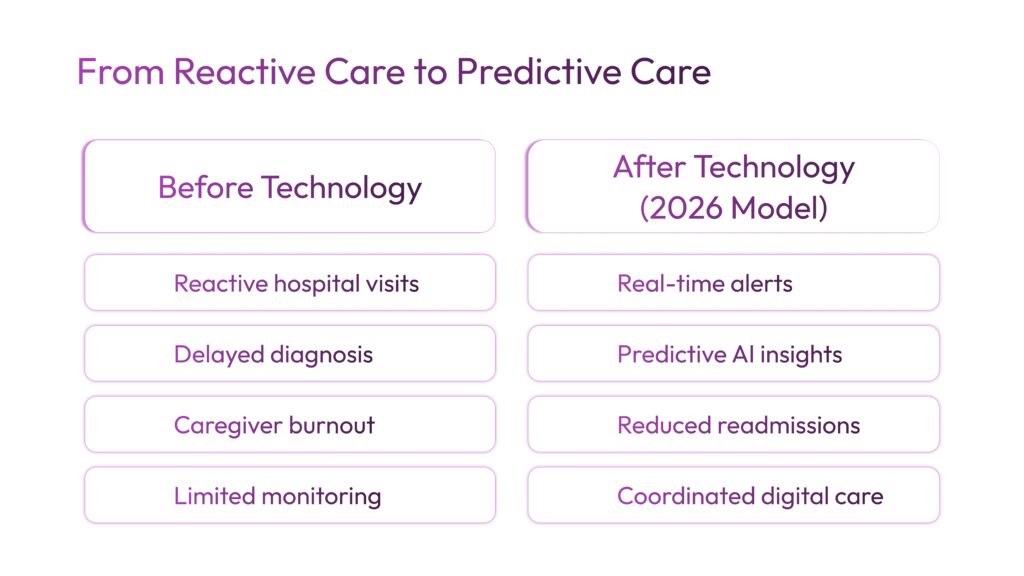
The AgeTech sector is no longer experimental; it is becoming foundational to home-based healthcare. In 2026, aging in place is being shaped by intelligent monitoring systems, predictive AI models, and connected home environments that extend clinical visibility beyond hospitals. Industry projections estimate the global AgeTech market is moving toward a multi-trillion-dollar scale, driven by demographic pressure and value-based care expansion.
The defining shift is this: home environments are becoming data-enabled care ecosystems, not just living spaces. Aging in place is at this intersection of smart homes, reliable affordable and intent based telecom network and energy sources and AI native digital health.
1. Remote Patient Monitoring (RPM)
Remote Patient Monitoring has transitioned from optional add-on to essential infrastructure. Healthcare systems are increasingly reimbursed for RPM services under value-based models, accelerating adoption across Medicare Advantage populations.
RPM tools now go beyond basic vital tracking and integrate continuous analytics dashboards for clinicians.
Core capabilities include:
- Wearables/Face scans tracking heart rate, glucose levels, oxygen saturation, and blood pressure
- Real-time alerts sent directly to Care Providers/Agentic AI Assistants when readings fall outside safe thresholds
- Reduction in hospital readmissions through early intervention
In 2026, RPM systems are also integrating behavioral signals such as decreased daily movement to flag early signs of frailty or infection before acute symptoms appear.
2. Telehealth & Virtual Visits
Telehealth is no longer pandemic-driven; it is embedded in standard care delivery. For seniors aging in place, virtual care removes transportation barriers and expands specialist access.
Health systems are now combining telehealth with remote diagnostics, allowing deeper evaluation without in-person visits.
Common telehealth applications include:
- Video consultations with primary care and specialists
- Virtual wound assessments for post-surgical recovery
- Medication reviews and chronic disease management follow-ups
In 2026, hybrid care models blending in-home monitoring with periodic virtual visits are proving more effective than episodic clinic appointments alone.
3. AI & Predictive Analytics
Artificial intelligence represents the most transformative layer in aging in place innovation. Instead of reacting to emergencies, predictive systems analyze longitudinal data to anticipate decline.
Modern AI systems analyze:
- Activity patterns and mobility changes
- Sleep disruptions
- Behavioral shifts and mood variability
- Biome data
- Vital sign trends over time
This shifts care from reactive → preventive.
Newer AI models are also being trained to detect subtle speech changes that may signal cognitive decline or stroke risk. As these tools mature, clinicians receive prioritized alerts rather than raw data streams reducing overload and improving decision accuracy..
The Rise of Agentic AI in Elder Care
Beyond predictive analytics, 2026 is seeing the emergence of Agentic AI —AI systems that don’t just analyze data but take proactive actions on behalf of seniors and caregivers.
Traditional AI provides alerts whereas Agentic AI executes tasks.
In aging in place, this changes everything.
How Agentic AI Makes a Difference:
- Automatically scheduling telehealth appointments when abnormal vitals are detected
· Booking transportation (e.g., ride services) for medical visits
· Reordering medications before they run out
· Sending reminders to caregivers when support is needed
· Coordinating between multiple family members to assign tasks
· Escalating emergency alerts if a fall is detected
Instead of simply notifying caregivers, agentic systems can act within predefined permissions — reducing delays and caregiver overload.
For example, if a senior misses medication twice, an agentic AI assistant could:
- Send a reminder to the senior
- Notify the caregiver
- Suggest rescheduling the dosage
- Schedule a virtual consultation if patterns continue
This represents a shift from passive monitoring to intelligent digital assistance.
4. Smart Home Technology
Smart homes are evolving into passive monitoring environments that protect seniors without being intrusive. Unlike wearable-only systems, embedded sensors collect environmental and movement data automatically. However, one critical enabler often overlooked is reliable high-speed internet connectivity.
Without stable broadband, remote monitoring systems, telehealth visits, AI dashboards, and caregiver alerts cannot function effectively. In 2026, reliable internet is no longer optional infrastructure — it is foundational to aging in place.
Key smart home technologies include:
- Fall detection sensors integrated into wearables or flooring
· Motion tracking to identify unusual inactivity
· Voice assistants enabling hands-free communication and reminders
· Automated medication reminders synced with caregiver dashboards
· Secure Wi-Fi and broadband connectivity to support continuous monitoring
As aging-in-place ecosystems become more connected, ensuring access to stable internet particularly in rural areas is becoming a public health priority. Federal broadband expansion initiatives are increasingly tied to telehealth and senior care access.
5. Robotics & Assistive Automation
Robotics is steadily moving from novelty to utility in senior care. While still emerging, assistive automation is addressing mobility support and medication adherence challenges.
Current and developing solutions include:
- Automated medication dispensers with timed locking systems
- Companion robots designed to reduce loneliness and stimulate cognitive engagement
- AI-driven mobility devices and smart wheelchairs
Research trends in 2026 are also exploring robotic lifting assistance to reduce caregiver injury risk in an area with significant long-term workforce implications.
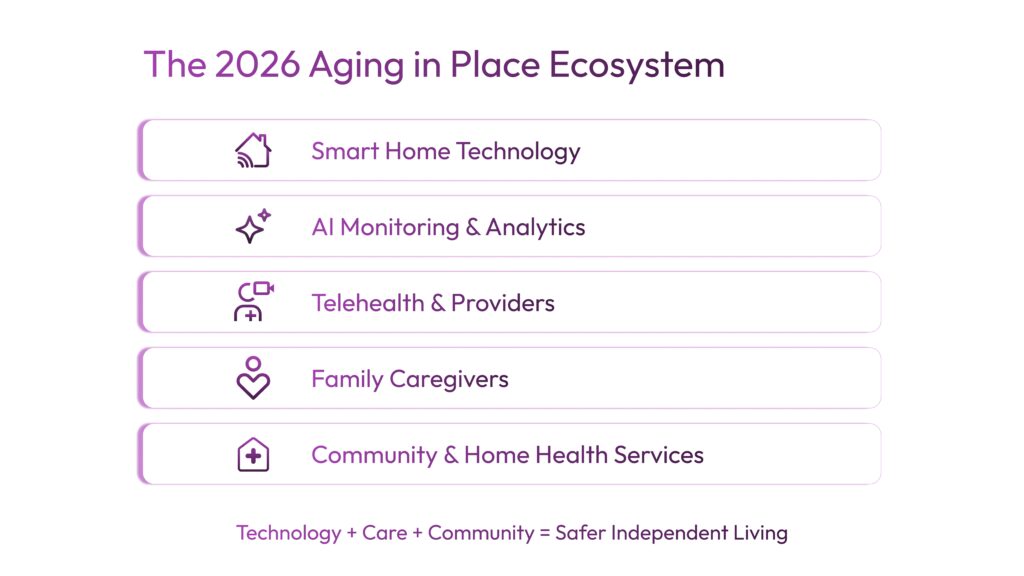
The Role of Caregivers in 2026
Caregivers remain central to successful aging in place, but their role is evolving. Rather than managing care through phone calls, notebooks, and fragmented communication, families increasingly rely on digital coordination platforms that centralize scheduling, medication tracking, and medical updates.
AI-powered caregiver support tools can flag missed medications, declining activity levels, or behavioral changes, allowing earlier intervention. Shared calendars and care dashboards ensure that responsibilities are distributed transparently across family members and professional aides.
At the same time, healthcare providers are recognizing the importance of including caregivers in care planning conversations. Discharge processes, telehealth consultations, and chronic disease management strategies now more frequently incorporate family members as active participants.
In 2026, caregiving is no longer an isolated responsibility — it is becoming digitally augmented and system-supported.
How to Prepare for Aging in Place (Step-by-Step Guide)

Successfully aging in place requires proactive planning. The earlier families begin preparing, the smoother the transition will be as needs evolve. Below is a structured, practical guide to help seniors and caregivers build a safe and sustainable aging-in-place plan.
Step 1: Conduct a Home Safety Audit
The home environment plays a critical role in preventing falls and maintaining independence. Many homes were not designed with aging adults in mind, so small modifications can significantly improve safety and mobility.
Key actions:
- Remove tripping hazards such as loose rugs, exposed cords, and cluttered walkways
- Install grab bars in bathrooms near toilets and inside showers
- Improve lighting in hallways, staircases, and entryways
- Add non-slip flooring or mats in bathrooms and kitchens
Consider a professional home safety evaluation by an occupational therapist for a more comprehensive assessment.
Step 2: Build a Care Network
Aging in place should never rely on one person alone. Creating a structured support network ensures shared responsibility and reduces caregiver burnout.
Your care network may include:
- Family members coordinating medical visits and daily assistance
- Professional home health aides or personal care assistants
- Local community programs and senior support organizations
- Digital caregiver platforms for shared scheduling and communication
Clear communication and defined roles help avoid confusion during emergencies.
Step 3: Integrate Technology
Technology strengthens independence and adds a protective safety layer. In 2026, aging in place increasingly depends on connected health tools.
Recommended technology solutions:
- Medical alert systems for emergency response
- Wearable health monitors tracking heart rate, oxygen, or glucose
- Smart home sensors for fall detection and activity monitoring
- Telehealth setup for virtual doctor visits and routine consultations
When introducing technology, ensure devices are simple, accessible, and comfortable for the senior to use.
Step 4: Legal & Financial Planning
Planning ahead legally and financially prevents crisis-driven decisions. Documentation and funding strategies should be addressed early.
Important preparations include:
- Establishing a healthcare proxy
- Setting up durable power of attorney
- Reviewing insurance policies and long-term care coverage
- Assessing Medicaid eligibility and state-based assistance programs
Consulting an elder law attorney can provide additional clarity and protection.
Step 5: Ongoing Health Monitoring
Aging in place is not a one-time setup it requires continuous monitoring and adaptation as health needs change.
Ongoing best practices:
- Schedule regular medical check-ins and preventive screenings
- Use remote patient monitoring (RPM) dashboards when available
- Track medication adherence through reminders or digital logs
Consistent monitoring reduces hospitalizations and allows early intervention when health patterns shift.
Understanding ADL and IADL in Aging in Place
A key concept in senior care and aging in place is the ability to perform Activities of Daily Living (ADLs) and Instrumental Activities of Daily Living (IADLs). ADLs refer to basic self-care tasks such as bathing, dressing, eating, mobility, and using the bathroom independently. IADLs are slightly more complex activities required for independent living, including managing medications, preparing meals, handling finances, using transportation, and maintaining communication. Monitoring changes in ADLs and IADLs helps caregivers and healthcare providers identify early signs of decline. Modern AI and remote monitoring tools can detect subtle shifts in these activities, allowing earlier intervention and better support for seniors living at home.
Frequently Asked Questions
What does aging in place mean in 2026?
Aging in place in 2026 refers to older adults remaining in their own homes safely and independently, supported by technology, caregiver coordination, and home-based medical care instead of moving to assisted living or nursing homes.
Is aging in place cheaper than nursing home care?
In many cases, yes. While home modifications and part-time care cost money, full-time institutional care is typically more expensive. Preventive home monitoring also reduces hospital admissions, lowering long-term costs.
What technology helps seniors stay at home?
Remote patient monitoring devices, telehealth platforms, smart home sensors, fall detection systems, AI-powered caregiver apps, and medication reminder systems all support independent living.
Does Medicare pay for aging in place services?
Traditional Medicare covers some home health services if medically necessary but does not cover long-term custodial care. Medicaid waivers and certain Medicare Advantage plans may provide additional coverage.
How can families reduce caregiver stress?
Families can use digital care coordination platforms, schedule respite care, share responsibilities across family members, and integrate AI monitoring tools to reduce manual oversight burdens.
How can Agentic AI make a difference for senior adults and their caregivers?
Artificial intelligence improves aging in place by detecting risks early, reducing emergencies, and supporting care coordination. Predictive AI analyzes changes in activity levels, ADLs, sleep, vital signs, and medication adherence to identify health concerns before they escalate.
Agentic AI goes a step further by taking action such as scheduling appointments, booking transportation, reordering prescriptions, and alerting caregivers automatically. Platforms like MaiaCare demonstrate how AI-driven coordination can reduce caregiver stress while creating a safer, more connected home-care experience.By 2027–2028, agentic AI is expected to integrate directly with smart home systems, insurance platforms, and electronic health records. This will enable end-to-end automation from detecting a fall to arranging transport, notifying family, and updating medical records all within minutes.
Sources: This article draws on recent industry reports, surveys, and research (e.g. AARP, Census, PHI, Hartford Foundation) to provide up-to-date statistics and trends on aging in place. It aims to be a comprehensive, authoritative guide to aging in place in the U.S. for families, caregivers, and professionals.
- https://www.phinational.org/policy-research/key-facts-faq/
- https://www.census.gov/library/stories/2019/12/by-2030-all-baby-boomers-will-be-age-65-or-older.html
- https://www.aarp.org/content/dam/aarp/ppi/topics/ltss/family-caregiving/caregiving-in-us-2025.doi.10.26419-2fppi.00373.001.pdf
- https://www.pewresearch.org/social-trends/2026/02/26/family-caregiving-in-an-aging-america/
- https://www.maia-care.com