

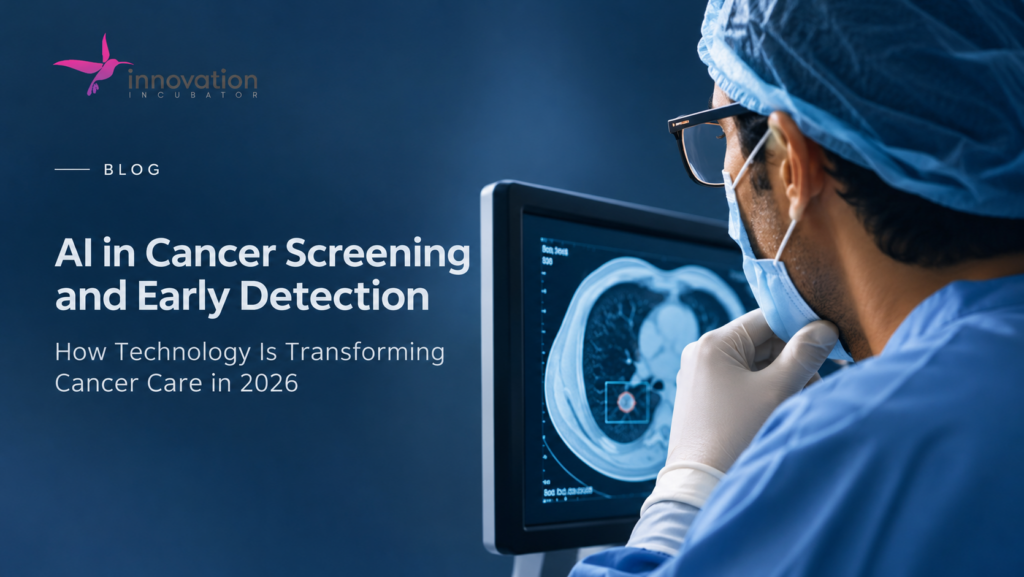
AI in Cancer Screening is opening new possibilities for early detection, from AI-powered medical imaging and cancer risk identification to improved prevention and more accessible healthcare worldwide.
Cancer remains one of the world’s most significant healthcare challenges. Despite advances in medicine, many cancers are still diagnosed at stages when treatment is more complicated, expensive, and less likely to succeed.
What if Agentic AI could help clinicians identify warning signs long before a tumour becomes obvious? What if suspicious abnormalities that are difficult to notice in a medical scan could be detected and highlighted for earlier investigation?
Across leading medical institutions, including Mayo Clinic, researchers are exploring how AI can identify subtle patterns in medical imaging, improve the accuracy of cancer screening, and support healthcare professionals in making faster, better-informed decisions.
In India, advancements in medical AI, digital healthcare infrastructure, and public-sector innovation are also creating opportunities to make cancer screening more accessible.
Agentic AI is moving beyond laboratory demonstrations into clinical evaluation and, in selected applications, real-world healthcare workflows. However, translating promising research into improved patient outcomes still requires rigorous validation, appropriate regulation, and clinical expertise.
The Global Cancer Burden: Why Early Detection Matters
The need for better cancer screening has never been more urgent.
In India, an estimated 15.62 lakh new cancer cases and 8.74 lakh cancer-related deaths occurred in 2024, according to a study published in JAMA Network Open, based on data from 43 cancer registries across the country. <Source: JAMA Network Open, 2025>
Globally, according to the International Agency for Research on Cancer (IARC), the latest GLOBOCAN estimates, published in July 2026, indicate that approximately 20.6 million new cancer cases and 9.8 million cancer-related deaths occurred worldwide in 2024. <Source: International Agency for Research on Cancer, 2024>.
The report also estimates that approximately one in five people will develop cancer during their lifetime.
Lung cancer accounted for approximately 2.6 million new cases, making it the most frequently diagnosed cancer globally, followed by breast and colorectal cancers.
Looking ahead, the annual number of new cancer cases is projected to reach approximately 34.4 million by 2050, representing a 67% increase from 2024.
These figures highlight the importance of prevention, early diagnosis, timely treatment, and stronger healthcare infrastructure.
Early detection can make a critical difference for many cancer types. Identifying disease before it advances can expand treatment options and, in some circumstances, improve survival.
Yet the availability of effective screening varies significantly across countries and communities. Many healthcare systems face limited access to imaging equipment, specialist physicians, diagnostic laboratories, and reliable follow-up services.
AI offers an opportunity to support these systems by helping clinicians interpret medical information more efficiently and consistently.
How Does AI Help Detect Cancer?
Traditional cancer screening relies on medical examinations, imaging, laboratory testing, and the expertise of trained healthcare professionals.
AI adds another layer of analysis.
Machine learning and deep learning algorithms can be trained to recognize complex patterns within medical images, laboratory findings, and other health data. Once properly validated, these systems can support clinicians by identifying areas requiring closer examination.
1. Medical Image Analysis
AI can analyse mammograms, CT scans, MRI scans, and digitized pathology slides to identify patterns associated with suspicious lesions.
For example, an AI-assisted imaging system may highlight a small abnormality that requires a radiologist’s attention.
The aim is not to replace the radiologist but to provide additional information that improves diagnostic decision-making.
2. Cancer Risk Assessment
AI models can analyse selected combinations of imaging findings, medical history, demographics, and clinical measurements to estimate the likelihood of certain diseases.
These assessments may eventually help healthcare professionals identify individuals who could benefit from closer monitoring or additional tests.
However, risk models must be validated for the populations in which they are used.
3. Automated Screening Support
Large-scale screening programmes generate substantial volumes of medical data.
AI can help prioritize examinations, identify potentially suspicious findings, and support specialists in managing workloads.
This may be particularly valuable where trained radiologists and pathologists are in short supply.
4. Digital Pathology
By analysing digitized tissue samples, AI can assist pathologists in identifying abnormal cell patterns and locating regions that warrant closer investigation.
These applications may improve laboratory efficiency while preserving the essential role of specialist review.
5. Screening Follow-Up and Care Coordination
Early detection is meaningful only when patients receive appropriate follow-up.
AI and digital healthcare systems may help identify missed appointments, prioritize abnormal findings, and support timely referrals.
This creates opportunities to improve the complete screening pathway rather than focusing exclusively on identifying abnormalities.
Where AI Is Making a Difference in Cancer Screening
Breast Cancer: Stronger Evidence for AI-Assisted Mammography
Breast cancer screening is one of the most extensively studied applications of AI in oncology.
In January 2026, researchers published major findings from the Mammography Screening with Artificial Intelligence (MASAI) trial in The Lancet.
The Swedish randomized trial involved more than 105,000 women and compared AI-supported mammography screening with standard double reading by radiologists.
The study found that:
- AI-supported screening achieved a sensitivity of 80.5%, compared with 73.8% in the standard screening group.
- Specificity remained at 98.5% in both groups.
- The interval cancer rate was 1.55 per 1,000 participants in the AI-supported group, compared with 1.76 per 1,000 in the control group.
The trial established that AI-supported screening was non-inferior to conventional double reading for the primary interval cancer outcome. It did not establish a statistically significant reduction in interval cancer rates.
Earlier findings from the same trial, published in 2025, demonstrated a 29% higher cancer-detection rate and approximately 44% lower screen-reading workload in the AI-supported group.
Together, these findings provide important evidence that AI can improve aspects of breast screening performance while reducing the workload involved in interpreting mammograms.
The results are encouraging for healthcare systems exploring how to maintain screening quality while managing specialist shortages.
Pancreatic Cancer: Mayo Clinic’s 2026 Early Detection Breakthrough
One of the most notable developments in cancer AI research during 2026 came from Mayo Clinic.
Pancreatic cancer is particularly challenging because it frequently develops without noticeable symptoms during its early stages. Consequently, many patients are diagnosed after the disease has progressed.
In April 2026, Mayo Clinic announced the results of a validation study involving an AI system known as the Radiomics-Based Early Detection Model (REDMOD).
The system analyses subtle changes in the appearance and texture of pancreatic tissue on routine abdominal CT scans.
These changes may be difficult to detect through conventional visual interpretation.
Researchers evaluated nearly 2,000 CT scans, including scans originally interpreted as normal from patients subsequently diagnosed with pancreatic cancer.
The AI model identified 73% of the prediagnostic cancers at a median of approximately 16 months before clinical diagnosis.
In some cases, it identified signals associated with cancer as much as three years before diagnosis.
This research is significant because it explores an approach to identifying disease before an obvious tumour becomes visible.
Rather than requiring an entirely new screening procedure, the model is designed to analyse existing CT scans, particularly among individuals considered at elevated risk.
However, REDMOD remains an investigational tool. It is not FDA-approved for clinical use or population screening, and prospective studies are required to establish whether its use improves patient outcomes.
Mayo Clinic is extending this research through its AI-PACED clinical study, which is examining AI-guided detection in patients at increased pancreatic cancer risk.
The broader lesson is compelling: AI may help clinicians extract valuable information from medical images that are already being collected during routine care.
Colorectal Cancer: Identifying Precancerous Lesions
AI-assisted colonoscopy is another important area of development.
During colonoscopy, physicians examine the large intestine for polyps and other abnormalities. Some polyps may eventually develop into colorectal cancer.
Computer-aided detection systems can analyse live video during the procedure and highlight areas that may require closer inspection.
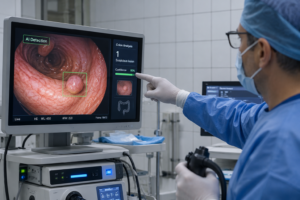
A 2026 systematic review and meta-analysis involving 46 randomized controlled trials and more than 37,000 participants found that AI-assisted colonoscopy was associated with a 22% relative increase in adenoma detection compared with conventional colonoscopy.
This is promising because identifying and removing certain precancerous lesions is an established part of colorectal cancer prevention.
Nevertheless, improvements in polyp detection do not automatically demonstrate reductions in cancer incidence or mortality. Some clinical trials have also shown smaller benefits in settings where endoscopists already achieve high detection rates.
AI should therefore be viewed as an additional clinical tool rather than a replacement for high-quality examinations.
Lung Cancer: Supporting CT-Based Screening
Low-dose CT screening can help detect lung cancer in eligible high-risk populations.
AI systems are being investigated for their ability to identify pulmonary nodules, assess suspicious imaging features, compare previous examinations, and support radiologists in evaluating findings.
A 2026 systematic review found promising diagnostic accuracy for deep-learning-assisted low-dose CT analysis. However, the researchers also highlighted limitations in the available evidence, including study heterogeneity and the need for stronger external validation. <Source : Springer Nature Link>
At present, these systems are best understood as tools that may enhance radiologist-led screening rather than autonomous lung cancer screening solutions.
Cervical Cancer: Opportunities for More Accessible Screening
Cervical cancer is a major public health concern, particularly in regions where access to screening and follow-up care is limited.
AI-based image analysis is being explored as a way to support the identification of abnormal cervical tissue and improve triage.
Such solutions could eventually support healthcare workers and specialists in underserved areas.
However, AI should complement established, evidence-based screening methods.
In July 2026, the World Health Organization issued updated implementation guidance supporting HPV DNA-based cervical cancer screening programmes. <Source: World Health Organisation>
This reinforces an important principle: emerging AI tools must be integrated into clinically validated screening pathways rather than replacing effective established tests without sufficient evidence.
AI in Cancer Screening: Global Innovation and India’s Growing Opportunity
Around the world, universities, hospitals, research institutions, and technology companies are investigating how artificial intelligence can improve cancer care.
The opportunities extend beyond advanced medical centres.
In healthcare systems with limited specialist availability, responsibly deployed AI may help support frontline workers, improve screening capacity, and strengthen referral networks.
This has particular relevance for India.
According to estimates from the Indian Council of Medical Research’s National Cancer Registry Programme, the number of new cancer cases in India was projected to reach approximately 1.57 million in 2025.
Cancer prevention and screening are therefore increasingly important components of India’s healthcare priorities.
IndiaAI and the National Cancer Grid
In 2026, India strengthened its efforts to support responsible AI applications in cancer care.
Under the IndiaAI Mission, the Cancer AI & Technology Challenge (CATCH) was launched in collaboration with the National Cancer Grid.
The initiative encourages clinical institutions and technology innovators to develop, test, and validate AI solutions across the cancer care continuum.
According to the Ministry of Health and Family Welfare, selected projects may receive milestone-based pilot funding of up to ₹50 lakh, with additional scale-up support of up to ₹1 crore, subject to demonstrated clinical readiness.
These initiatives highlight a growing recognition that meaningful healthcare innovation requires collaboration between technology developers and medical institutions.
Responsible Healthcare AI: SAHI and BODH
In February 2026, the Government of India introduced two important initiatives:
Strategy for AI in Healthcare in India (SAHI) provides guidance for safe, ethical, evidence-based, and inclusive AI adoption across healthcare.
Benchmarking Open Data Platform for Health AI (BODH) supports structured evaluation and benchmarking of healthcare AI solutions.
These initiatives aim to address challenges associated with clinical accuracy, trustworthy implementation, and responsible technology adoption.
For healthcare AI developers, such frameworks are important because laboratory performance alone is insufficient to establish clinical readiness.
Kerala’s Emerging Role in AI-Based Cancer Screening
Kerala is also becoming part of India’s expanding medical AI ecosystem.
In August 2026, the Government of India’s Technology Development Board announced support for the manufacturing and commercialization of GrivaVision, an indigenous portable digital colposcope with AI-assisted capabilities for identifying cervical precancerous lesions.
The initiative includes plans to establish manufacturing capabilities in Kollam, Kerala.
The technology is intended to support more accessible cervical screening in primary and community healthcare settings.
While commercialization support does not itself establish clinical effectiveness, the development illustrates how locally engineered healthcare technologies may contribute to broader screening access.
India’s opportunity lies not only in developing AI algorithms but also in building affordable, clinically validated solutions suitable for diverse healthcare environments.
Can AI Make Cancer Screening More Accessible?
One of AI’s most important potential contributions is improving access to screening support.
For healthcare institutions, carefully implemented AI tools may offer several operational advantages.
More efficient clinical workflows: AI may help specialists prioritize suspicious findings and reduce time spent reviewing routine examinations.
Improved consistency: Validated models can provide standardized analysis that complements clinical expertise.
Support for underserved locations: AI-assisted digital systems may allow smaller facilities to access specialist-backed screening workflows.
Better use of existing infrastructure: Some applications can analyse images already captured during routine examinations.
Stronger follow-up coordination: Integrated digital tools can help track screening outcomes, referrals, and follow-up requirements.
The actual benefits depend on the technology, population, clinical setting, and availability of appropriate follow-up care.
AI cannot compensate for a healthcare system that lacks essential diagnostic services or treatment capacity.
Can AI Help Reduce the Risk of Developing Cancer?
Cancer prevention is particularly important in India, where an estimated 15.6 lakh new cancer cases were recorded in 2024. Research published in the Indian Journal of Medical Research estimates that nearly 70% of India’s cancer burden is associated with potentially modifiable risk factors, including tobacco use, alcohol consumption, unhealthy diets, obesity, and physical inactivity.
AI-powered health applications and wearable devices could help people identify these risks by analysing their dietary habits, physical activity, weight changes, and other lifestyle patterns. They can flag unhealthy behaviours and suggest personalized changes, such as improving diet, exercising regularly, and reducing tobacco and alcohol consumption. While AI cannot guarantee cancer prevention, it could help individuals make informed lifestyle choices and reduce certain preventable risk factors.
The Challenges: Why Responsible AI Matters
Despite encouraging developments, applying AI to cancer screening introduces important clinical, technical, and ethical questions.
Clinical Accuracy and False Results
An AI model may fail to identify an existing abnormality or may incorrectly flag a healthy finding as suspicious.
False negatives can delay necessary investigation, while false positives can create anxiety and lead to additional testing.
Clinical evaluation must consider both risks.
Data Quality and Population Diversity
Models trained primarily using data from one healthcare system may perform differently when introduced to another.
Differences in demographics, imaging equipment, disease prevalence, and clinical protocols can affect results.
For countries such as India, diverse and representative datasets are particularly important.
Patient Privacy and Security
Healthcare AI may involve sensitive patient information.
Appropriate consent, data protection, access controls, cybersecurity, and compliance with applicable regulations must be incorporated into system design.
Clinical Validation and Regulatory Oversight
Promising research outcomes do not automatically make an AI application suitable for routine clinical deployment.
Independent validation, prospective evaluation, regulatory requirements, and ongoing performance monitoring are essential.
Human Oversight
Perhaps the most important principle is that AI should support healthcare professionals rather than independently replace clinical judgment.
Cancer screening decisions require context, medical expertise, patient communication, and appropriate diagnostic confirmation.
The most effective applications will be those that combine advanced technology with responsible clinical practice.
Building the Future of Healthcare AI Through Collaboration
The next stage of AI-driven cancer care will depend on how effectively technological innovation connects with real clinical needs.
Developing an accurate algorithm is only one part of the process.
Healthcare institutions need solutions that fit existing workflows, protect patient information, demonstrate clinical value, and remain accessible to the communities they serve.
Technology companies require opportunities to collaborate with clinicians, test solutions using appropriate datasets, and translate research into reliable healthcare applications.
This is where ecosystems connecting industry, academia, government, startups, and medical institutions can play an important role.
Initiatives such as the MeitY IndiaAI Centre of Excellence in Artificial Intelligence, Thiruvananthapuram, Keralam (CAIK), with its focus on applied AI and healthcare innovation, offer a collaborative foundation for exploring real-world challenges.
As an industry partner in the CAIK ecosystem, Innovation Incubator recognizes the importance of connecting technological expertise with practical opportunities for impact.
In healthcare, this collaborative approach can help create pathways for research, clinical validation, responsible product development, and wider adoption of useful AI solutions.
The Road Ahead: Earlier Detection, Better Decisions, and More Accessible Care
Artificial intelligence is not a cure for cancer, nor can it guarantee early detection.
But research published in 2025 and 2026 offers increasingly meaningful evidence that AI can support important aspects of cancer screening.
From AI-assisted mammography and colonoscopy to the investigational early-detection models being developed at Mayo Clinic, researchers are demonstrating how advanced computational techniques can reveal clinically useful patterns in medical data.
For India, the opportunity is especially significant.
By bringing together clinical expertise, responsible AI development, validated medical technologies, and digital healthcare infrastructure, the country can work toward more accessible and effective cancer screening systems.
The future of AI in oncology will not be defined solely by the sophistication of its algorithms.
It will be determined by whether these technologies help healthcare professionals make better decisions, enable more people to receive appropriate screening, and ultimately improve measurable patient outcomes.
The goal is not simply smarter technology. It is earlier intervention, better-informed care, and a healthcare system capable of reaching more people.
Frequently Asked Questions
Can artificial intelligence detect cancer earlier than doctors?
Certain AI systems have shown improved detection performance in specific research settings. However, their effectiveness varies by cancer type, technology, and clinical setting. AI findings still require appropriate medical interpretation and confirmation.
Is AI already being used in cancer screening?
Yes. AI-assisted tools are used in selected clinical workflows, including some medical imaging and endoscopy applications. Other technologies, such as Mayo Clinic’s REDMOD pancreatic cancer model, remain investigational.
How is AI being developed for cancer screening in India?
India is supporting healthcare AI research, pilot testing, and responsible adoption through initiatives including the IndiaAI Mission, National Cancer Grid collaborations, SAHI, and BODH. Indigenous screening technologies are also being developed and evaluated.
Will AI replace oncologists or radiologists?
AI is more appropriately viewed as a decision-support technology. Cancer diagnosis and care continue to require qualified healthcare professionals, clinical judgment, confirmatory testing, and patient-centred decision-making.
References and Further Reading
- International Agency for Research on Cancer — Global Cancer Statistics 2024, published July 2026
- Indian Journal of Medical Research — Cancer Incidence Estimates and 2025 Projections
- The Lancet — MASAI Trial, January 2026
- The Lancet Digital Health — MASAI Screening Performance, 2025
- Mayo Clinic — AI Identifies Pancreatic Cancer Years Before Diagnosis, June 2026
- 2026 Meta-analysis — AI in Colonoscopy
- 2026 Research — AI-Assisted Lung Cancer Screening
- WHO — HPV-Based Cervical Cancer Screening Guidance, July 2026
- Government of India — AI Initiatives in Cancer Screening, March 2026
- Government of India — GrivaVision Cervical Cancer Screening Technology, August 2026